


















Your Questions - Securikett FAQ
Find Answers to Common Questions

Frequently Asked Questions
GENERAL INFORMATION
Securikett develops and manufactures security labels for a wide range of applications—both with and without unique product serialization.
Non-serialized labels are used to indicate tampering and to provide physical protection for packaging.
With serialized labels, each product is assigned a unique identity (UID). The resulting usage and scan data make it possible to identify, visualize, and analyze gray market and parallel trade activities based on location, time, and frequency.
Securikett is not a conventional label converter. The materials required for multi-layer security labels are developed and produced in-house. No pre-manufactured standard materials are purchased. This allows labels, adhesive systems, and security features to be precisely tailored to packaging materials, products, and processes.
Accordingly, there is no universal solution. Every implementation is based on an application-specific design and a customer-specific production approach.
SecurityLabels are used for the prevention and detection of product counterfeiting as well as unauthorized tampering. By incorporating appropriate security features, they help protect brand rights and reduce risks associated with tampered or non-genuine products. When equipped with serialized UIDs, they also enable verification of product authenticity throughout the supply chain and by the end user.
We offer a wide range of SecurityLabels, e.g. tamper-evident VOID labels, smart labels with (unique) QR codes, labels with hologram, destructible labels, or traceless labels with VOID effect.
Security labels are more crucial than ever as counterfeiting and product tampering are on the rise. They help protect your brand, ensure product authenticity, and enhance consumer trust.
SecurityLabels incorporate integrated functions such as tamper evidence, unique serialization, and technical authentication mechanisms. These functions go beyond the effect of a purely visual seal. They enable objective detection of interference and unambiguous identification of individual products, thereby supporting traceability and security verification across defined process stages.per evidence, serialization, and authentication technologies that go beyond a simple seal. These features provide a higher level of security and traceability.
Implementing our security labels helps safeguard your brand from counterfeiting, reduces the risk of revenue loss, and enhances your reputation. It also provides valuable data insights through tracking and verification.
The use of SecurityLabels enables end consumers to verify product authenticity based on defined verification criteria. For labels with unique identification numbers (UIDs), no separate application is required for verification. The check can be performed using standard mobile devices, for example by accessing a web-based verification interface. The verification methods are designed to be usable without specialized technical knowledge. As a result, the likelihood of purchasing non-authentic products is reduced, and transparency regarding product origin is increased for the user.
ANTI COUNTERFEITING & ANTI TAMPERING
To protect products from counterfeiting, companies can implement several strategies like tamper-evident packaging and holographic labels with visible residue or pattern when removed, that are difficult to replicate, digital authentication technologies like QR-codes for product verification and serialization by assigning identifiers to each product unit to track and verify authenticity throughout the supply chain.
Globalized supply chains and the rapid growth of e-commerce have made it easier for counterfeiters to produce, advertise and distribute fake goods across borders. Online marketplaces and social media provide direct access to consumers, while small parcel shipments make counterfeit products more difficult for customs authorities to detect.
At the same time, complex supply chains, inconsistent enforcement and limited resources create gaps that criminal networks can exploit. The high potential profits and comparatively low risk of detection make counterfeiting an attractive business model for organized crime.
Yes. Digital authentication solutions such as unique QR codes or NFC tags can do more than verify whether a product is genuine. They can also connect customers directly with the brand and provide access to product information, instructions, warranty registration, loyalty programs or personalized content.
Every authentication scan can therefore become a valuable customer interaction—strengthening trust while giving brands greater insight into how, where and when their products are used.
At the same time, complex supply chains, inconsistent enforcement and limited resources create gaps that criminal networks can exploit. The high potential profits and comparatively low risk of detection make counterfeiting an attractive business model for organized crime.
Holograms provide visual protection but are most effective when combined with serialization or digital authentication technologies.
The discovery of counterfeit products on the internet is a serious incident. It damages your brand, unsettles customers, and can involve legal risks. Companies should act immediately, systematically, and decisively.
- Secure evidence
Document the counterfeit with screenshots, URLs, order details, product photos and—if possible—by purchasing a sample product. This evidence is essential for later legal action. - Contact the platform
Report the incident to the relevant sales platform (e.g. Amazon, eBay, Alibaba) using the appropriate brand protection or IP infringement form. Many platforms respond within a few days if the brand is registered.
Good experiences have also been made with the International Chamber of Commerce (ICC), which helps companies get in touch with local producers and apply targeted pressure. - Seek legal advice
Consult with your legal department or specialized IP lawyers on whether cease-and-desist letters, preliminary injunctions, or criminal complaints are appropriate—particularly in cases involving professional counterfeiters or repeated abuse. The chances of success vary depending on the jurisdiction of the distributor. - Inform customers
Use your channels (website, newsletter, social media) to warn customers about counterfeits and explain the characteristics of genuine products. This strengthens trust in your brand and raises awareness among potential buyers. - Establish internal reporting systems
Set up an internal process for handling counterfeit alerts—e.g. a central email address or ticket system for tips from sales, customer service, or field staff. - Prevent long-term issues
In addition to immediate measures, companies should also invest in prevention. This includes tamper-evident security (seal) labels, digital product protection solutions, and collaboration with online brand protection providers that systematically monitor marketplaces for counterfeits. This makes it harder for counterfeiters to access the market—and easier for customers to identify genuine products.
Select features that are suitable for your product type and packaging material, such as Security Seals or holographic labels with VOID effect. Ensure that tamper-evident features are clearly marked and instructions for consumers to check for tampering are provided. Incorporate tamper-evident measures into the overall supply chain security strategy, including tracking and monitoring systems. Educate consumers on the importance of tamper-evident features and how to identify them to ensure product safety.
The key difference lies in their interaction: physical measures are visible, offering immediate, straightforward verification, while digital measures are dynamic, providing detailed, up-to-date information that can be accessed online. Combining both approaches can create a robust defense against counterfeiting, ensuring products are secure and authentic from production to consumer use. Securikett offers both features in one package.
Identify the level of security needed, from basic measures like branded tamper-evident seals with residue effect to advanced technologies like holographic labels and digital tracking systems. It’s important to consider the ease of implementation and scalability of the solution, ensuring it can grow with your business and adapt to evolving threats. Securikett solutions are scalable.
Tamper-evident seals, labels and tapes with visible residue after opening are critical in preventing product tampering by providing clear, visible indications of any unauthorized access to a product. They show obvious signs of tampering, such as broken seals, void messages, or damaged packaging.
By making it immediately apparent when a product has been compromised, tamper-evident security labels, seals and tapes deter tampering attempts and help maintain the integrity of the product.
Additionally, they build consumer confidence, as customers can easily verify that the product they purchase has not been altered or interfered with, thus ensuring the safety and authenticity of the product.
TAMPER-EVIDENT SEALS, LABELS & TAPES
A standard VOID solution may be sufficient for simple tamper detection.
Yes. Our patented Paper-VOID was developed specifically for paper and cardboard packaging. It adheres reliably to fiber-based surfaces and makes any attempts to open or tamper with the package clearly visible.
To prevent a VOID label from being cut through unnoticed, an additional Cut Indicator protection feature provides even greater security.
For high-quality products and luxury items, a residue-free solution is often required. A traceless VOID is ideal for this purpose, as it leaves no residue on the product and self-destructs when removed, preventing it from being reapplied.
Additional security and finishing elements, such as holograms or cold-stamping foils, can further enhance protection against counterfeiting while also underscoring the brand’s exclusivity and perceived value.
If the label is to be equipped with a unique identification number—a so-called UID—we also offer the appropriate serialization solution. For more information, please see the Smart Labels section.
Temperature-sensitive inks can be integrated directly into the label. If the temperature exceeds or falls below defined thresholds, they change their optical properties and make the thermal stress visible.
Our WashVOID technology reacts to contact with water or other liquids by causing a visible change in the label. This makes it possible to reliably detect even non-mechanical attempts at tampering.
With Triple VOID, as the label is peeled off layer by layer, multiple VOID layers in different, surprising colors become visible. This transforms the tamper-evident feature into a unique brand experience and creates an added element of surprise for customers.
A transparent or translucent VOID seal protects the packaging without obscuring the design, colors, or product information. When the package is sealed, the label remains discreet, while any attempt to open or tamper with it becomes clearly visible.
A resealable VOID seal is ideal for products that are consumed in multiple stages. When the package is opened for the first time, the VOID effect is permanently triggered, clearly indicating that the package has already been opened. However, the label remains functional afterward and can still be used to reseal the package multiple times—for example, for tea, coffee, or other products that are taken out repeatedly.
Security tapes are widely used wherever shipment integrity and tamper detection are critical.
Consumers can immediately see whether a package has already been opened. This transparency reduces uncertainty and increases confidence in the received product.
Shipment integrity refers to the assurance that a package reaches its destination without unauthorized opening, replacement or manipulation. Tamper-evident tapes provide visible evidence supporting shipment integrity.
Tamper-evident tapes do not physically prevent theft. However, they make unauthorized access visible and therefore act as a deterrent.
VOID TECHNOLOGY
Counterfeiting means simulating, reproducing, or modifying a product or its packaging without authorization.
IP rights infringement means using or implementing technologies or capabilities that are protected by intellectual property rights without authorization.
An adulterant substance means that a fraudulent component has been added to, or substituted within, the finished product.
Tampering means that a legitimate product, its packaging, or its security features have been altered without authorization.
Substitution means the complete or partial undeclared replacement of authentic components or ingredients with substitutes.
Simulation refers to an illegitimate product designed to resemble—but not exactly duplicate—a legitimate product.
Diversion means the sale or distribution of products outside their intended or authorized markets.
Theft refers to legitimate products that are stolen and then passed off as legitimately sourced.
Overrun means producing legitimate products in excess of contractual or regulatory limits, including false production reporting or undeclared production shifts.
SECURITY PRINTING AND HOLOGRAMS
Security holograms are advanced optical security features designed to protect products, brands, and documents against counterfeiting and unauthorized reproduction. Using specialized holographic technologies, they create visual effects that are difficult to replicate with conventional printing methods. Security holograms are commonly integrated into labels, seals, packaging, certificates, and identification documents to enable fast visual authentication and strengthen brand protection.
Security holograms are available in various formats and security levels depending on the required protection. Common types include e.g. 2D holograms, or 3D holograms. Additional covert and forensic security elements, such as microtext, hidden images, guilloches, and nano-features, can further enhance counterfeit resistance and product authentication.
Custom holograms can be designed to reflect a brand’s identity while providing unique security features. Logos, company names, serial numbers, QR codes, microtext, hidden images, and variable data can be integrated into the holographic design. Security labels with holograms can also be combined with a tailor-made VOID effect.
Standard holograms are primarily designed for visual authentication and do not automatically provide tamper evidence. However, holograms can be combined with tamper-evident technologies such as VOID effects, destructible materials, or security cuts. These solutions leave visible evidence when removal or manipulation is attempted, helping to protect products against unauthorized opening, reuse, and counterfeiting.
Yes. Transparent holograms offer the same visual authentication benefits as conventional holograms while allowing underlying information, graphics, or packaging designs to remain visible. They are widely used on product packaging, pharmaceutical cartons, cosmetics, and branded products where both security and aesthetics are important. Transparent holographic labels can also incorporate advanced overt and covert security features for enhanced protection.
Security hologram seals are widely used to protect products, packaging, and documents against counterfeiting, tampering, and unauthorized duplication. They enable quick visual authentication, increase consumer trust, and strengthen brand protection. When combined with tamper-evident features, unique QR codes, or Track & Trace systems, hologram seals become part of a comprehensive product authentication strategy that supports supply chain security and regulatory compliance.
Yes. Modern anti-counterfeiting strategies often combine security holograms with digital technologies such as unique serialization (e.g. QR codes, NFC), and traceability systems. This multi-layered approach enables both visual and digital authentication, providing enhanced protection against counterfeiting while improving supply chain visibility and consumer engagement.
SUSTAINABLE SECURITY SOLUTIONS
Sustainable packaging supports the circular economy by keeping materials in use for as long as possible, promoting recycling and reuse, and designing products to be more easily recoverable and less wasteful.
Future trends include increased use of smart packaging with embedded technology, advances in bio-based materials, more companies adopting zero-waste packaging strategies, and greater collaboration across industries to standardize sustainable practices.
Expamples include the use of mono-materials that are easier to recycle, reusable containers, biodegradable plastics and minimalistic packaging designs
Recyclable packaging can be processed and used to create new products, reducing the need for virgin materials. Biodegradable packaging, on the other hand, breaks down naturally into non-toxic components over time. Compostable packaging is a type of biodegradable packaging that decomposes in composting conditions.
QR-CODES AND SERIALIZATION
Serialization plays a crucial role in anti-counterfeiting efforts by assigning a unique identifier to each product unit, such as a serial number or barcode. This allows manufacturers to track and trace individual products throughout the supply chain, from production to sale. By doing so, it becomes much easier to identify and authenticate genuine products, making it significantly harder for counterfeiters to introduce fake goods into the market.
Additionally, serialization enables real-time monitoring and verification, allowing consumers and retailers to check the authenticity of a product. This not only protects consumers from purchasing counterfeit products but also helps maintain brand integrity and trust.
Moreover, serialization facilitates efficient recalls and quality control by quickly identifying and isolating affected batches, thereby enhancing overall supply chain security and consumer safety.
QR codes and other 2D-codes play a significant role in product security by providing a convenient and accessible method for verifying the authenticity of products. They can be easily scanned by consumers using smartphones, leading to a secure website or database that confirms the product’s authenticity. This simple action helps prevent the sale of counterfeit goods by offering immediate access to product information, such as origin, manufacturing details, and unique identifiers.
Additionally, QR codes can be integrated with traceability systems to track products throughout the supply chain. This ensures that any discrepancies or unauthorized alterations can be quickly identified, enhancing the security of the entire distribution process. By enabling real-time data access and verification, QR codes not only protect consumers but also help companies maintain control over their products and protect their brand reputation.
Securikett QR-Codes on Securikett tamper-evident labels with VOID-effect are suitable for a variety of package sizes. This flexibility ensures they can adapt to different packaging needs.
CONSUMER ENGAGEMENT
Consumer engagement or Customer Engagement refers to the interactions between a brand and consumers/customers throughout the product lifecycle. Connected products create direct touchpoints that increase trust, loyalty and brand interaction.
Product digitalization enables brands to communicate directly with consumers through QR codes, NFC tags and personalized digital experiences, creating stronger customer relationships.
Authentication provides consumers with confidence that they are purchasing genuine products while also unlocking additional digital services and content.
PRODUCTION & CUSTOMIZATION
The implementation timeline varies depending on your specific processes and requirements. Since every label is customized to meet your unique needs, we work closely with you to ensure a seamless integration. Typically, the process can take anywhere from a few weeks to a couple of months, depending on the complexity and scale of your project.
Our solutions are scalable and cost-effective. The bigger the batch sizes the more attractive pricing is due to decreasing costs per unit.
For small orders, visit our Voidikett webshop, where we offer generic samples.
SECURITY FEATURES & PROTECTION LEVELS
We provide a wide range of Security Printing technologies, e.g. Holograms and OVDs, Guilloches, Microtexts, Effect Colors, Invisible Inks, Taggants, Watermarks, Cuts and Perforations, Scratch-Offs, or Unique QR-codes for product authentication. A combination of multiple security features is key to achieve a high level of security.
The more security features are integrated into a label, the higher the level of security.
The security labels are designed to ensure that different types of tampering attempts are clearly detected and indicated. Depending on the application, specific security mechanisms are employed.
If a label is mechanically removed, a defined VOID effect is triggered, making it irreversibly visible that the label has been peeled off. This provides clear evidence of an opening or access attempt to the packaging.
To detect thermal exposure, temperature-sensitive inks can be integrated that change their optical properties when defined temperature thresholds are exceeded or undershot.
For tampering attempts involving liquids, a WashVOID technology is available in which contact with water or other liquids causes a visible change to the label. This ensures that non-mechanical tampering can also be reliably detected.
APPLICATIONS & DURABILITY
The suitability of the security labels depends on the respective substrate surface, such as plastic, metal, or glass, as well as on surface characteristics and environmental conditions. Since adhesion properties are material- and process-dependent, label design is carried out on an application-specific basis.
For validation, an original customer packaging sample is requested and tested internally under defined conditions. Based on these tests, a suitable adhesive is selected to ensure reproducible adhesion and the required tamper-evidence function for the specific application.
The temperature and weather resistance of the security labels is designed on an application-specific basis and aligned with the defined storage, transport, and operating conditions. Relevant parameters include, among others, the permissible temperature range, humidity, UV exposure, and mechanical stresses.
Based on the requirements provided by the customer, suitable materials, adhesives, and security features are specified and validated. For a robust design, detailed information on the intended environmental conditions is required.
The production of security labels for specific materials is generally possible, provided that the properties of the respective substrate are taken into account. Key influencing factors include surface energy, material composition, and surface structure. Based on these parameters, suitable adhesive systems and defined coat weights are selected.
The separation forces of the integrated VOID effects can be designed on an application-specific basis. This is achieved both through the selected VOID technology (single, double, or triple VOID effect) and through a customized label design. The objective is the reproducible activation of the tamper-evidence feature under defined conditions.
Limitations apply to silicone-containing or PTFE-coated (Teflon-coated) surfaces, as reliable adhesion of self-adhesive security labels cannot be ensured on these substrates. In such cases, alternative application formats, such as bands or hang tags, can be used as functional solutions.
CERTIFICATIONS & SUSTAINABILITY
We are a globally certified security printer, holding ISO 9001 and ISO 14298 certifications. Our labels comply with the requirements of FMD and PPWR, and our company is FSC®-certified (FSC® C199332).
Innovation is in our DNA. Whether in our digital or physical portfolio, we continuously evolve, create new solutions, and stay at the forefront of our industry. We invest up to 10% of our annual revenue in research and development. The result of this consistent innovation work includes 7 active patents and over 40 registered design protections.
Why is this important?
Patented technologies give our customers the advantage of working with unique, legally protected solutions that cannot be easily copied. This not only provides a technological edge but also enhances the credibility of your products with counterfeiters, authorities, and end customers.
How do our customers benefit?
As a Securikett customer, you gain access to protected technologies not available on the open market. You can rely on our solutions being continuously developed and legally safeguarded—a decisive factor for brand owners who value exclusivity and long-term investment protection.
Geographical protection
Our patents are registered in strategically important markets such as the EU, the USA, and Asia—where our customers operate and where product protection is particularly relevant.
Developed from practical experience
Every patented solution is the result of close collaboration between our engineers, material experts, and feedback from real customer projects. This ensures that innovations don’t just exist on paper but work in everyday market conditions.
Competitive advantage for our customers
The exclusivity of our patented technologies can be used in marketing and sales as a clear differentiator—a benefit competitors cannot replicate. At the same time, our patent portfolio supports customers in tenders and compliance requirements where innovative and protected solutions are mandatory.
Patents as part of a comprehensive protection concept
Our patents are a key building block in a holistic approach to brand and product protection. Combined with tamper-evident labels, intelligent design, and the highest quality standards, we create solutions that significantly hinder counterfeiters’ access to the market.
If you would like to learn more about our patents or explore how your individual solution can be protected, feel free to contact us directly.
Our PaperVOID labels and tapes are designed to be recycled together with paper and cardboard packaging, enhancing recyclability and supporting the circular economy. Additionally, we offer pull breaks to ensure the label remains on the packaging and is recycled along with it. For plastic packaging, we provide suitable labels and can also produce labels made from recycled PP material.
Our products correspond to the three-dimensional nature of the concept of sustainability. The concept of sustainability is based on three pillars: social, ecological, and economic.
Social: With our security labels, we protect our customers’ customers from fraud, counterfeiting, and tampered products. Consumer safety is at the forefront of our products.
Ecological: We design our products in such a way that they are in line with a circular economy. An optimized selection of raw materials is the key to meet changing requirements during the life cycle of a product.
Economic: We support our customers in securing the market position of established, reliable, and successful products that are targets for counterfeiters.
Paper security labels are in no way inferior to their polypropylene counterparts. They can be equipped with all the same security features, such as tamper evidencent VOID-effects, serialization, holograms, or special inks for indication of temperature or fluid tampering. Thus, they offer equivalent protection and functionality.
One key advantage is their compatibility with paper or cardboard packaging: when applied to paper-based materials, paper labels significantly improve the recyclability of the overall package, supporting more sustainable packaging solutions.
The only current limitation is that fully transparent paper labels are not yet available. However, highly translucent paper variants do exist, offering a tranluscent appearance.
For reusable packaging systems, tamper-proof security seals are available that allow the packaging to be reused. These include residue-free removable VOID labels that generate a clear and irreversible tamper-evidence indication upon first removal, without leaving adhesive or material residues on the product or packaging.
These solutions enable a clear distinction between proof of first opening and subsequent reusability of the packaging. A prerequisite for effectiveness is that the security label is present and intact in the intended application. Integrity verification is therefore performed visually based on the condition of the label and assumes that end users are informed about the meaning and function of the seal.
Sustainability is a direct responsibility of our executive board. Our production is entirely carbon-free, and we operate in accordance with ESG criteria. We are proud to have been awarded an EcoVadis Silver Medal and have committed to the Science Based Targets initiative (SBTi) to reduce our carbon emissions by 42% by 2030, based on our 2022 baseline. We are among the first Austrian companies to record Scope 1, 2, and 3 emissions.
Securikett is FSC® certified (FSC® C199332). The certification confirms the use of materials from responsibly managed sources in accordance with the standards of the Forest Stewardship Council®.
In addition to the certification, sustainability aspects are systematically recorded and documented. This includes the collection and assessment of the greenhouse gas footprint, the publication of a sustainability report, and the operation of an energy management system. These measures serve to continuously monitor and improve environmental performance indicators.
LOGISTICS & DELIVERY
Labels are typically supplied on rolls, but we are happy to adapt to your specific requirements. Sheet or stack delivery is also possible – especially for tax stamp applications.
Yes, we deliver worldwide.
TRANSPARENT DISTRIBUTION CHANNELS
The black market involves illegal transactions, while the grey market involves the legal but unofficial sale of goods, often circumventing authorized distribution channels.
The grey market, also known as the parallel market, involves the trade of goods through unauthorized, unofficial, or unintended distribution channels. This can significantly affect the economy in various ways:
- Revenue loss for authorized dealers and manufacturers
- Consumer risk
- Intellectual property violations
- Market distortion
- Impact on pricing and brand image
- Tax evasion and loss of government revenue
The black market can significantly impact the economy by diverting revenue from the government, reducing the effectiveness of regulations, and fostering corruption and crime.
INDUSTRY SPECIFIC QUESTIONS
PHARMA
Some regions, like the EU under the Falsified Medicines Directive (FMD), require unique identifiers and anti-tamper devices on prescription medicines. While over-the-counter (OTC) drugs are typically excluded from these requirements, manufacturers may include these features voluntarily for added product safety.
The Drug Supply Chain Security Act (DSCSA) requires prescription medicines in the United States to be serialized with a unique identifier and enables electronic traceability throughout the pharmaceutical supply chain. Manufacturers, wholesalers, distributors, and dispensers must exchange and verify product data electronically to help detect counterfeit, diverted, or illegitimate products. The regulation also requires trading partners to be authorized and to support product verification and traceability, ensuring greater supply chain security and patient safety.
A pharmaceutical label is usually small and has the high transparency. This allows the information under the label to remain visible.
Paper-based SecurityLabels are suitable for all kind of paper or cardboard packaging, like pharma boxes. They can be recycled together with the packaging and contribute to the circular economy.
No. The pharmaceutical seals and labels can simply be added to existing packaging, without any need to change its design. Our SecurityLabels can be fully customized in terms of size, design, color, security printing features and the design of the VOID-effect.
E-COMMERCE
E-commerce product protection combines authentication, traceability, tamper-evident packaging, anti-counterfeiting technologies, and fraud prevention measures to secure products throughout the entire customer journey. These solutions help brands maintain product integrity, protect consumers, and increase trust in online purchasing environments.
One of the most common threats is return fraud, which occurs when products returned to retailers differ from the items originally purchased. Fraudsters may return counterfeit, damaged, previously used, or substituted products while claiming they are genuine purchases. These activities create financial losses for retailers and can result in counterfeit or compromised products re-entering legitimate inventory.
Another significant risk is product substitution, where an authentic product is replaced with a counterfeit, lower-value, damaged, or used item during fulfillment, distribution, or return processing. Because e-commerce supply chains involve multiple handling stages, identifying where a substitution occurred can be difficult without robust product identification and tracking systems.
Brands must also address grey market diversion, which occurs when genuine products appear in unauthorized sales channels. While the products themselves are authentic, they are sold through distributors or marketplaces that are not approved by the brand. Product serialization and unique identifiers help detect grey market activity by revealing suspicious sales patterns, unauthorized sellers, unexpected product locations, and regional distribution leaks.
Marketplace counterfeiting remains a growing concern for both brands and consumers. Counterfeit products can infiltrate online marketplaces and appear alongside legitimate offerings, making it difficult for buyers to distinguish genuine products from fake ones. Since consumers cannot physically inspect products before purchase, trust increasingly depends on brand reputation, package integrity, and reliable authenticity verification.
To combat these risks, many brands implement product authentication solutions that allow products to be verified using QR codes, serialized identifiers, NFC tags, or digital product identities. Authentication enables consumers, retailers, and brand owners to confirm that a product belongs to the legitimate supply chain and has not been replaced or counterfeited.
Equally important is item-level traceability, which provides visibility into a product’s journey from production and warehousing through fulfillment, delivery, and post-purchase customer interactions. Traceability helps brands monitor product movements, investigate fraud incidents, identify diversion activities, and improve supply-chain visibility.
By tracking individual products rather than batches alone, companies gain more precise insights into where risks occur and how products move through distribution networks. Discover how traceability works and how item-level serialization helps brands protect products across e-commerce channels.
Authentication and traceability form the foundation of a modern e-commerce product protection strategy. Combined with tamper-evident packaging, serialization, consumer engagement tools, and advanced analytics, these technologies help brands reduce fraud, detect unauthorized distribution, protect consumers, and maintain trust across online sales channels.
As e-commerce ecosystems continue to expand, brands that invest in comprehensive product protection solutions are better positioned to safeguard revenue, strengthen customer confidence, and maintain control over their products throughout the entire supply chain.
Modern authentication technologies also strengthen customer trust by providing instant access to verified product information through a simple smartphone scan. Learn more about how authentication works and how brands use digital product identities to verify authenticity and engage consumers.
SPIRITS, WINES & BEVERAGES
Beverage authentication is the process of verifying that a bottle originates from the authorized producer and has not been altered, refilled or counterfeited.
For premium beverage brands, authentication is no longer limited to packaging inspection. Today, consumers, distributors and brand owners increasingly expect the ability to verify authenticity through secure digital systems that provide instant confirmation of a product’s identity.
Effective authentication helps brands:
- Protect revenue from counterfeit products
- Strengthen consumer trust
- Support regulatory compliance
- Improve supply chain visibility
- Enable direct consumer engagement
Counterfeit alcohol refers to beverages that falsely claim to originate from a legitimate producer. Counterfeiters often imitate well-known brands while concealing the product’s true origin.
Counterfeit products may contain substituted ingredients, diluted contents or unauthorized packaging components. In addition to damaging brand reputation, counterfeit alcohol can create significant health and safety risks for consumers.
Refill fraud occurs when genuine bottles are emptied, refilled with unauthorized contents and reintroduced into the market as authentic products.
This type of fraud is especially common in premium spirits such as whisky, rum, cognac, tequila and vodka, where the value of the original bottle can be substantial.
Because the packaging itself may be genuine, refill fraud is often difficult to detect through visual inspection alone.
Counterfeit alcoholic beverages may contain inferior ingredients, altered formulations or non-compliant packaging. Beyond harming brand reputation, such products can pose serious health and safety risks to consumers.
Premium wines and spirits combine several characteristics that make them attractive targets for criminal activity:
- High retail value
- Strong global brand recognition
- Limited editions and collectible products
- International distribution networks
- Consumer willingness to pay premium prices
The higher the perceived value of a bottle, the greater the incentive for counterfeiters to replicate or reuse it.
Traditional supply chain systems often track products at pallet, carton or case level. While useful for logistics, these methods provide limited visibility once products are separated from larger shipments.
Bottle-level traceability assigns a unique identity to every individual bottle, allowing brands to monitor products throughout their lifecycle.
Benefits of bottle-level traceability include:
- Individual bottle authentication
- Product tracking across markets
- Recall management
- Supply chain analytics
- Diversion detection
- Consumer verification
As supply chains become increasingly digital, beverage brands are moving toward connected products that combine physical packaging with digital intelligence.
Product digitalization enables:
- Authentication
- Traceability
- Consumer engagement
- Market intelligence
- Anti-counterfeiting programs
- Sustainability initiatives
At the same time, emerging Digital Product Passport requirements are expected to increase demand for persistent product identities and verifiable product information throughout the product lifecycle.
Bottle-level digital identities provide the foundation for these future capabilities.
The most effective beverage protection programs combine multiple layers of security rather than relying on a single technology.
A modern wine, spirits and beverage protection strategy typically includes:
- Tamper-Evident Packaging
- Product Authentication
- Unique Serialization
- Bottle-Level Traceability
- Consumer Engagement
- Data Analytics and Market Intelligence
By integrating physical security features with digital authentication and traceability, beverage brands can protect product integrity, combat counterfeit alcohol, prevent refill fraud and maintain control over global distribution networks.
FURNITURE - DPP IMPLEMENTATION
The EU’s Ecodesign for Sustainable Products Regulation (ESPR) introduces the Digital Product Passport (DPP) to improve transparency, sustainability and circularity across product lifecycles. Furniture has been identified as one of the priority product groups under the ESPR Working Plan.
A Digital Product Passport enables manufacturers, consumers, repair providers and recyclers to access reliable product information throughout the product’s lifetime. It supports regulatory compliance while making it easier to repair, refurbish, reuse and recycle furniture instead of disposing of it.
While the final furniture-specific requirements are still being defined, a furniture Digital Product Passport is expected to include information such as:
- Material composition and recycled content
- Wood species and sourcing information
- Components and spare parts
- Repair and maintenance instructions
- Disassembly guidance
- Chemicals or substances of concern
- Durability and expected service life
- Recycling and end-of-life instructions
- Compliance documentation and declarations
Providing this information helps all stakeholders maximise product lifetime and recover valuable materials at end of life.
The final retention period for furniture Digital Product Passports has not yet been specified. The upcoming furniture-specific legislation under the ESPR will define the exact requirements.
However, because furniture is a long-life product, manufacturers should plan for product information to remain accessible for many years—potentially throughout the product’s service life—to support repairs, resale, refurbishment and recycling. The ESPR also requires DPP information to remain available even if the original manufacturer no longer exists.
Not necessarily.
The level of identification depends on the specific product requirements. Some products may be identified at model or batch level, while others may require a unique identifier for each individual item.
For furniture, unit-level identification offers significant advantages beyond compliance. A unique Digital Product Passport enables individual service histories, warranty management, repair documentation, authentication and traceability throughout the entire product lifecycle.
Yes, if the right marking technology is used.
Many manufacturers rely on engraved metal plates for long-term identification. However, high-performance labels can provide the same durability while offering additional advantages. Modern label materials withstand abrasion, moisture, UV exposure and cleaning chemicals, making them suitable for demanding furniture applications.
Tamper-evident security labels also provide protection against removal or replacement, ensuring that the product identity remains authentic throughout its lifetime.
Effective recycling starts with knowing exactly what a product is made of.
A Digital Product Passport allows recyclers to identify materials, coatings, adhesives and components before dismantling a product. This simplifies material separation, increases recycling efficiency and enables higher-quality material recovery.
Traceability also supports refurbishment and reuse by making replacement parts, repair instructions and maintenance information readily available, extending the useful life of furniture before recycling becomes necessary.
Companies do not need to wait for the final furniture legislation before taking action. Good preparation includes:
- Mapping existing product and material data
- Identifying data gaps across the supply chain
- Standardising product information
- Defining unique product identifiers
- Selecting durable data carriers such as secure QR code labels
- Evaluating Digital Product Passport software solutions
- Running pilot projects on selected product lines
Manufacturers that establish these foundations early will be well positioned for future ESPR requirements while also improving product traceability, customer service and circular business models.
COOPERATION & SERVICE
Securikett provides expert consulting for the selection and design of suitable label solutions. This advisory service includes, among other aspects, the definition of appropriate label sizes, the design and configuration of VOID effects, and the selection and combination of relevant security features.
The goal of the consulting is to specify a label solution that meets the requirements of the specific application, substrate, environmental conditions, and security-related needs. The design is based on technical parameters and defined use scenarios.
We offer free-of-charge samples. However, please keep in mind that generic samples are not tailored to your specific application — factors such as adhesive strength or the visibility of the VOID effect may vary depending on the material. That’s why we always request your original packaging to customize the labels to your exact requirements.
Many of our customers operate in highly sensitive industries, such as the pharmaceutical sector, and prefer not to be named publicly. We will gladly provide references upon request. Some of our Case Studies can be found here. For specific industries please send us your request.
Of course, our technical support team will assist you throughout the entire integration process.
Just get in touch with us. Whether online via the contact form on our website, by email at sales@securikett.com, by phone at +43 2259 30 800, or by booking a meeting through our contact page — we’re happy to hear from you!
We regularly receive inquiries from companies interested in partnering with Securikett—whether as sales partners, system integrators, or joint solution providers. We greatly appreciate this interest, and we are generally open to strategic collaborations when they offer clear added value and are based on shared values such as quality, confidentiality, and customer focus.
What partners are we looking for?
We prefer to work with organizations that:
• operate in related industries (e.g. packaging, labeling, supply chain, brand or product protection),
• have established customer relationships,
• bring technical know-how or consulting expertise to provide lasting support to end customers,
• are interested in long-term cooperation, not just short-term sales opportunities.
What does a partnership with Securikett look like?
Depending on the focus, cooperation can take the following forms:
• sales or representation of selected Securikett solutions,
• integration of our security and traceability technologies into existing systems,
• joint market development in defined regions or industries.
Technology partners welcome
In addition to sales partnerships, we also collaborate with technology partners, for example in the field of anti-code cloning or counterfeit detection. Our approach remains customer-oriented: we do not work exclusively, but always recommend the solution best suited to the customer’s specific requirements.
What’s next?
If you are interested in a partnership, we look forward to hearing from you. Please describe your business model, your expertise, and why you see Securikett as a suitable partner. We review each request individually and with great care.
PRODUCT DIGITALIZATION
Codikett is Securikett’s digital platform for product traceability, verification, and authentication using unique identifiers (UIDs).
Product digitalization means giving every product its own unique code. This code is printed or applied on the item and links to a digital record. In this record, information such as product details, production data, logistics steps, or regulatory content like a Digital Product Passport can be stored. To make this work, companies need to choose how codes are applied (print, label, packaging), ensure integration on the production line, connect the system with ERP or MES, and handle data securely. It is also important to define clear responsibilities for data ownership and to make sure all partners in the supply chain follow the same standards.
Product digitalization involves connecting a product to information in the cloud using a unique code for each item. Digitalization offers several key benefits: it enhances supply chain transparency through real-time tracking and data-driven decisions, improves efficiency and reduces costs, and boosts consumer engagement by enabling personalized experiences and direct communication channels, thereby fostering brand loyalty.
Today, product digitalization is an indispensable component to all anti-counterfeiting measures, which typically includes copy-proof technology and tampering verification features.
Product digitalization enables detailed data collection and analysis, providing insights into consumer behavior and market trends for strategic decision-making. It streamlines regulatory compliance by ensuring accurate and accessible documentation throughout the product lifecycle.
When using Codikett UIDs, a planned distribution chain is assigned to each product. By scanning the codes, distributors, consumers, and other users provide feedback on whether the products are in the correct market.
a. Grey trade will be unveiled immediately.
b. Packaging aggregation is one of the possible methods for assigning destinations.
Every participant can log in to Codikett and download their own UIDs in custom formats, typically CSV. The brand owner always has full visibility on who issued which codes and when. For automated use cases, UIDs can also be provided via API, so they can flow directly into printers, ERP systems, or partner workflows.
Codikett records verification and process events within seconds. Dashboards update continuously, and optional webhooks provide instant notifications. This allows near real-time tracking across production, logistics, and market activities.
Real-time data is also used to create alerts in case of fraudulent activities within the market.
Codikett provides information that can be used across different areas. Scan data shows where and when products are verified, which can reveal unusual market activity. Production and packaging records help to compare planned and actual quantities, while logistics events make product movements visible. Time-based comparisons support the identification of irregularities and help in coordinating supply chain and quality processes.
Scan the QR code on the product’s security label with your smartphone to access the verification page and check the validity of the Unique Identifier. You will then receive further information on the product and its authenticity.
Yes, customers do scan the codes. Our software encourages scanning through features like gamification (e.g., slot machines and giveaways), interactive product information, and engaging content.
Securikett’s labels are designed to attract attention with their appealing designs. Codikett features, such as a hidden pin, additionally attract users while providing security against code cloning. These features work together to increase consumer interaction and engagement with the codes.
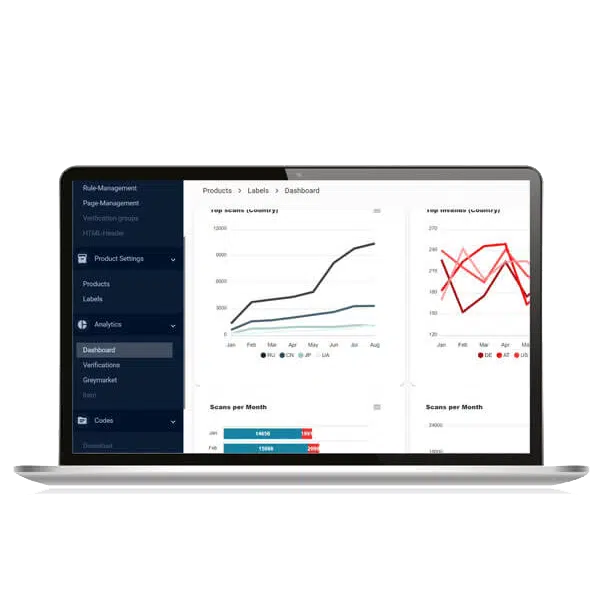
Scan volumes are displayed in the Codikett analytics dashboard. Users can customize dashboards to focus on specific products, regions, or periods. Reports can be scheduled or exported, and time-frame comparisons help to identify trends or unusual activity.
Yes, Codikett is available globally. You can track and verify products internationally, ensuring security and engagement with consumers no matter their location.
Codikett features intuitive interfaces that simplify use, customizable frontends tailored to production needs to ensure users only see relevant information, and role-specific views that allow different users to interact with data pertinent to their responsibilities, thereby enhancing productivity and usability.
Yes, Codikett is designed to meet the requirements of the Digital Product Passport for each industry sector. Two options are available, depending on industry requirements and public infrastructure. One option is to display DPP information directly in Codikett, and the other is to provide interoperability with a third-party industry provider.
The number of users is flexible and tailored to your needs. You can manage user roles independently through the Codikett platform, assigning specific permissions for different roles such as administrators, operational personnel, distributors, and inspectors. This allows you to control access and functionalities based on users’ responsibilities.
No, the displayed information is specially selected based on user roles, ensuring that only relevant and permitted data is shown to different stakeholders.
Codikett uses a modular pricing structure tailored to specific needs and the scale of implementation. Costs depend mainly on the number of unique codes issued and the modules in use. A pilot can start with a small SaaS fee and setup, while large-scale rollouts scale with volume and features such as analytics, CMO control, or digital product passports. This way you only pay for what you actually need.
For a detailed and customized pricing plan, please contact our sales team.
Codikett can be connected to and communicate with existing systems, including SAP/ERP and CRM, using customized APIs.
Yes, you can start with a small implementation of Codikett for a limited number of products or batches and gradually extend its use as your needs grow. You can begin with basic product verification and later expand to full track and trace capabilities or grey market detection as your requirements evolve. Additionally, you can initiate implementation in one part of your company or organization and gradually expand to more affiliates or Contract Manufacturing Organizations (CMOs).
Codikett detects market fraud by analyzing verification data for duplicate scans, out-of-market scans, impossible travel, burst patterns, and many more, then surfaces hotspots on geo heatmaps and triggers alerts for fast brand protection action.
The solution is built for peaks. a cloud-native, autoscaling architecture keeps verification and response times low even during high-traffic campaigns or DDOS-Attacks.
The simplest way to use Codikett is through internet access and a browser. Many clients also provide a domain or subdomain and set up a CNAME for branded verifications. Single sign-on can be added to connect existing identity systems. For automated use, Codikett offers APIs that allow integration with ERP, MES, or other platforms. Depending on the application, the setup can range from almost no IT effort to a more complex connection of multiple systems.
For a typical traceability solution you need at least a way to apply the code or label, a device to scan and record codes, and often hardware to print shipping labels. Many customers already have suitable printers or scanners that can be incorporated, so additional investments are often minimal. Codikett itself runs without mandatory proprietary hardware.
Yes, Codikett supports RFID and NFC. They can be combined with other features such as QR codes, holograms, or tamper-evident seals on the same product. This enables hybrid solutions where RFID or NFC streamlines logistics and warehouse handling, while tamper loops provide physical protection and authentication
Data is hosted in EU cloud regions by default, encrypted at rest, with strict tenant isolation. Alternative regions are available on request to meet your data residency and compliance needs.
Many clients start with a minimal setup, such as basic product verification or simple code management. As their needs grow, they extend Codikett step by step into areas like track & trace, CMO control, or digital product passports. This phased approach is common across our diverse customer base.
Yes, we support reader implementation ourself or with partners as an end-to-end solution, we scope devices, coordinate with our integrator, and commission cameras, scanners, and printers with Pilots, training, and acceptance tests.
Digital solutions help to identify and reduce grey market and counterfeiting activities. Codikett makes diversion visible, supports authentication, and provides actionable data. Several customers have already used this to significantly reduce grey market volumes.
Product digitalization can be implemented in very different timeframes. A scaled-down pilot can be up and running within two weeks, while a full rollout across sites and systems may take considerably longer. The key is to involve all stakeholders from the start and agree on scope, processes, and data ownership. Beginning with a pilot allows companies to test the setup in practice and then extend step by step as requirements grow.
Codikett allows you to manage CMOs by distributing codes in controlled batches, similar to a tax stamp system. For example, a defined quantity of codes is allocated to a production order, and only this amount can be used. Each code is tracked from issuance to application, so you can see exactly how many products were produced and detect if codes are unused, duplicated, or misapplied. This gives transparency over production volumes and helps ensure that CMOs follow agreed limits.
Yes, if the QR codes are generated as dynamic links. In this case the code itself stays the same, but the target URL behind it can be updated at any time. This makes it possible to adjust landing pages, campaigns, or product information even after packaging is already in the market.
Yes, Codikett can work with existing identifiers if they are unique and of sufficient quality. Codes can be imported in formats such as CSV or JSON and loaded into the system, so you do not need to change your current identifiers. This also applys for Shipping Codes on outer packages.
IMPLEMENTATION OF DIGITALIZATION AND DPP
No, not automatically.
Our software solutions are hardware-agnostic. This means we do not sell hardware as a prerequisite for implementation. Instead, we evaluate which existing devices, systems, and infrastructures can continue to be used.
In many cases, existing scanners, mobile devices, printing systems, or IT infrastructures can be integrated.
In digital solutions, the real complexity often does not lie in the visible code, QR code, or interface. The challenge usually lies in the underlying data.
Especially in solutions for Track & Trace or Digital Product Passports, a clean data structure is essential. Without reliable data, even the best software cannot deliver meaningful value.
A serious answer is: the costs depend heavily on the scope and the initial situation.
Key cost factors include:
- number and complexity of the processes to be mapped,
- existing system landscape,
- required interfaces,
- data quality and availability,
- number of user groups and roles,
- requirements regarding security, availability, and compliance,
- scope of pilot projects, testing, training, and rollout,
- necessary adaptations to existing workflows.
A common mistake is focusing only on software costs. In practice, significant effort is often required for coordination, data preparation, integration, testing, training, and change management.
An in-house implementation can make sense if a company has sufficient internal resources, long-term technical expertise, and clear responsibilities.
In many cases, however, the required effort is underestimated. A digital solution not only has to be developed, but also operated, maintained, secured, and continuously improved over the long term. For many companies, working with an experienced external partner is therefore more economical and less risky.
What Differentiates a Successful Implementation from a Pure Software Project?
A pure software project primarily focuses on functions. A successful implementation focuses on the complete operational use within the company.
Software is only one part of the solution. What matters is whether the solution is understandable, integrable, and usable.
That is why we do not work with a rigid standard process that is identical for every company. We structure the implementation around the actual requirements and the existing business reality.
For more than 15 years, we have supported companies in implementing digital solutions across different industries and technical environments.
Every project has its own framework conditions. Some companies start with clearly structured data, others with historically evolved processes. Some projects require deep technical integration, while others begin with a focused pilot project.
HOW SECURIKETT DIFFERS FROM CONVENTIONAL LABEL CONVERTERS
|
|
Converter | |||
|---|---|---|---|---|
Material Control |
|
Full control over face stock, adhesive, silicone and backing material. VOID layer made in-house |
|
Dependent on material supplier with all restrictions of his capabilities |
Customization |
|
Since all components are source separately customization is always possible and can be tailored to the required application |
|
Usually limited to available material variants |
Innovation Speed |
|
New properties and security features can be directly integrated |
|
Innovation depends on upstream material suppliers |
Technical Expertise |
|
Expertise in coating, chemistry, material science, and label production |
|
Primarily focused on printing and converting |
Supply Chain Security |
|
Independent from material supplier |
|
Higher dependence on a limited number of VOID material manufacturers |
Protection against Counterfeiting & Tampering |
|
Proprietary material developments are more difficult to replicate and bespoke material can be used, i.e. with watermarks |
|
Counterfeiters can often source the same base materials |
Specification Flexibility |
|
Adhesive performance, release characteristics, VOID effect, and facestock can be tailored |
|
Limited flexibility beyond standard material offerings |
Quality Control |
|
Control over every production step |
|
Quality control starts with incoming material inspection |
Vertical Integration |
|
Integrated value chain, from single components to the ready-made label |
|
Focus on printing, die-cutting, and converting |
Consulting Expertise |
|
Higher understanding of the influence of every component thus, more knowledge about technical alternatives is possible |
|
Typically stronger focus on printing and production processes |
Need further help?
Did you not find what you were looking for? We will be happy to advise you personally!